Living with Epilepsy
The Epilepsy Learning Health System (ELHS)
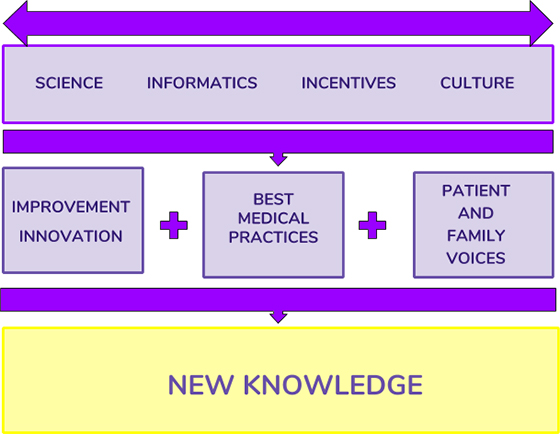
“A learning healthcare system is one in which science, informatics, incentives, and culture are aligned for continuous improvement and innovation, best practices are effortlessly embedded in the care process, patients and families are active participants in all elements, and new knowledge is captured as an integral by-product of the care experience,” from Best Care at Lower Cost: The Path to Continuously Learning Health Care in America.
In an LHS:
Information is provided by individuals and families within the learning system. This information (data) is continuously analyzed to gain new knowledge.
The results help everyone gain a better understanding of a disease process and how medical interventions affect individual health outcomes.
This new knowledge will guide improvements in the quality of medical care each person will receive.
WHY Do We Need ELHS?
Epilepsy is not a single disease. It is a diverse set of disorders with different causes. In addition, there are many different types of seizures, epilepsy syndromes, and outcomes.
Despite over a dozen new drugs becoming available in the last two decades, 30 to 40% of people with epilepsy still live with uncontrolled seizures. Newer drugs have reduced side effects but have not changed the number of people with uncontrolled epilepsy. There is also little information about the comparative effectiveness of these different medications, or which drugs may work best, to guide treatment decisions.
Wide variations in epilepsy care delivery and clinical practice may contribute to individual outcomes, including racial and ethnic disparities in access to comprehensive epilepsy care.
HOW Can ELHS Help Families Like Mine?
We envision a healthcare system in which we learn from every person with epilepsy, and in turn, improve outcomes for everyone with epilepsy. We do this by studying information (not tied to a person’s name or identifiable information) about a person’s diagnosis, treatment, evaluation and care from healthcare providers, then analyzing it in a standardized way. This information can then be used to answer questions about:
Quality care ensures that the health care services provided to individuals and groups of people with epilepsy will improve health outcomes.
Comparative Effectiveness of Treatments - The ELHS team is committed to learning more about the effectiveness of epilepsy treatments and how medical teams make treatment decisions.
The Role of Community Based Strategies - Empowering individuals and communities to take action can lead to improved health outcomes. Communities can play a significant role in providing education, resources and supports to improve quality of life for people living with epilepsy.
The ELHS aims to ensure that every person with epilepsy is able to live their best life.


